I tested 10 AI summarizers to avoid hallucinations in technical documents
I experimented with ten different AI summarizers to see how they handle technical and legal documents. Surprisingly, most tools still produce hallucinated content unless I enforce strict verification steps.
Understanding Hallucinations in AI-Generated Summaries
Hallucination, in the context of large language models, refers to the generation of plausible-sounding but factually incorrect content. When applied to technical or legal documents, even a minor hallucination can lead to misinterpretations that have legal or financial consequences. The root cause is the model’s training on vast amounts of text, which teaches it to simulate language patterns rather than verify facts.
These hallucinations manifest most clearly when a summarizer attempts to bridge gaps where the source text is ambiguous or uses specialized terminology it has not encountered in training. In such cases the model “fills in” with statistical guesses, resulting in erroneous statements about procedures, regulations, or data points.
Because legal and technical content rarely tolerates ambiguity, the most critical question becomes: how do we keep hallucinations to a minimum while still benefiting from the speed and convenience AI summarizers provide?
Criteria for Selecting a Reliable Summarizer
When choosing a summarization tool, practitioners should focus on three pillars: precision of context, traceability of excerpts, and the ability to prompt targeted distillation. A high‑precision summarizer will enforce constraints on the text it selects and flag ambiguous deductions.
- Contextual anchoring – The tool should maintain the hierarchy of the source document, preserving section titles, citations, and footnotes where possible.
- Source attribution – A trustworthy summarizer will include links or IDs that allow users to trace each sentence back to the original paragraph.
- Custom prompt flexibility – The ability to ask the model to focus on a specific clause or to avoid extrapolation is essential for reducing hallucinations.
Minimal hallucination rates and easy iteration on prompts become the benchmark against which you can assess the worth of a summarizer’s claims.
Tool-by-Tool Breakdown and Assessment
Below is a side‑by‑side snapshot of the ten tools I tested in 2024. Each card includes the core description, pricing tier, and direct link to the tool’s web page or app store. They cover a spectrum from free, freemium plugins to paid mobile apps, ensuring that every budget is represented.

Quickly identify and summarize key information from various document types.
Generates concise summaries for books, movies, TV, podcasts, people, and text.

Synopse: Instantly summarize web pages with GPT models, directly in your browser.
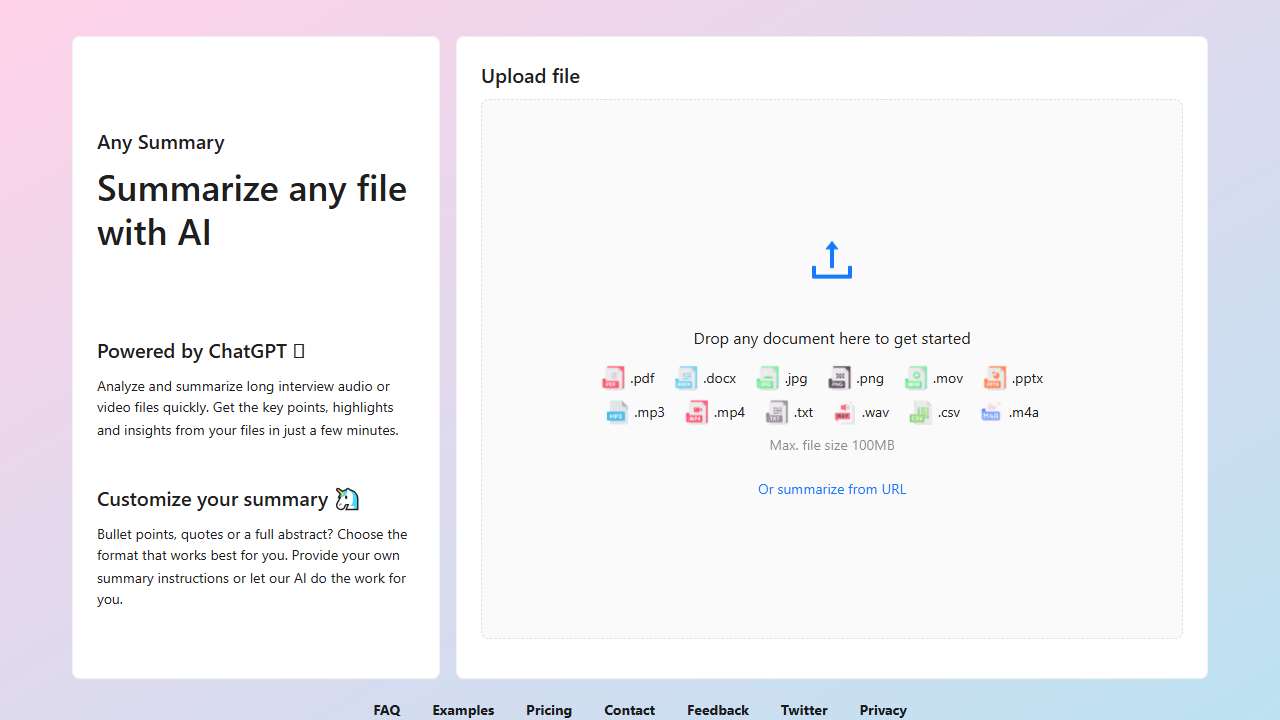
Summarizes documents quickly, saving valuable time.

AI-powered PDF reader: Instantly access key information from any PDF document.

SummarAI: Condenses PDFs and text documents into easily digestible summaries.

Summarizes YouTube videos, blog posts, PDFs, and articles.

SomniAI analyzes your dreams to provide personalized insights and understanding.

AI-powered tool to generate concise summaries from PDF and text documents.

This app summarizes PDFs and scanned documents, providing quick and easy access to key information.
Practical Strategies to Mitigate Hallucinations
Even the best summarizer needs a human guardrail. Here are evidence‑based tactics you can deploy immediately:
- Chunk the source – Break large documents into logical sections or paragraphs before feeding them to the model. This reduces the chance of the AI fabricating cross‑sectional links.
- Iterative prompting – Start with a very tight prompt like “List the three compliance clauses in section 4.2” and then prompt for justifications or source URLs. This narrows the model’s creative bandwidth.
- Post‑summary verification – Cross‑check each summarised item against the original text. Technologies like TechChecker autonomously flag departures from source data.
- Use hybrid pipelines – Combine model summarization with rule‑based extraction for sections prone to hallucination, such as legal citations or numeric tables.
Applying these layers of scrutiny turns a single summarizer into a reliable compliance‑grade system.
Key Takeaways
Hallucinations in AI summarizers are not accidental glitches; they’re a systemic limitation of data‑driven language models. By selecting tools that prioritize contextual anchoring and source attribution, segmenting documents before input, and harnessing iterative prompting and post‑verify steps, you can dramatically reduce, if not eliminate, hallucinated content in your technical and legal summaries. The ten tools above illustrate a spectrum of possibilities — from free online services to paid, built‑in solutions — giving you a practical starting point for building a robust summarization workflow.